South Tyrol.
One land,
many worlds.
Between vineyards and glaciers, alpine meadows and rock towers lies one of the most varied hiking regions in the Alps – and right in the middle, in Toblach, is my home.
Where you are landing
Whether you come from Asia, America or just next door: South Tyrol lies in the heart of the Alps, in the far north of Italy – and yet it feels quite different from what many people expect.
- 1EuropeIn the middle of the Alps
- 2ItalyIn the far north, bordering Austria and Switzerland
- 3South TyrolAutonomous Province of Bolzano, with its own language and culture
- 4ToblachUpper Puster Valley, in the Dolomites, near the Three Peaks
- Languages
- German, Italian and Ladin
- Currency and time
- Euro, Central European Time
- By plane
- via Innsbruck, Bolzano, Verona, Venice or Munich
- By train
- by train to Toblach in the Puster Valley
Almost 3,700 metres of elevation
From the lowest point in the Unterland at around 210 metres to the summit of the Ortler at 3,905 metres: hardly anywhere else are so many landscapes so close together. In a single day you can have breakfast under palm trees and stand by a glacier at lunchtime.
- 3,905 mOrtler – glaciers and eternal ice, South Tyrol’s highest mountain
- 2,999 mGreat Peak (Cima Grande) – the pale rock towers of the Dolomites
- ~2,000 mAlpine pastures and stone-pine forests – mountain lakes, alpine flowers, marmots
- 1,256 mToblach – mountain village in the Upper Puster Valley, gateway to the Three Peaks
- ~260 mBolzano – vineyards, apple orchards and a mild climate
- ~210 mUnterland – almost Mediterranean, with cypresses and wine
Alps and Dolomites
The Central Alps
In the north and west: dark primary rock, glaciers and high three-thousanders – from the Ortler via the Ötztal Alps to the Zillertal Alps. This is also home to the Rieserferner-Ahrn Nature Park, where I worked as a nature park ranger for many years.
The Dolomites
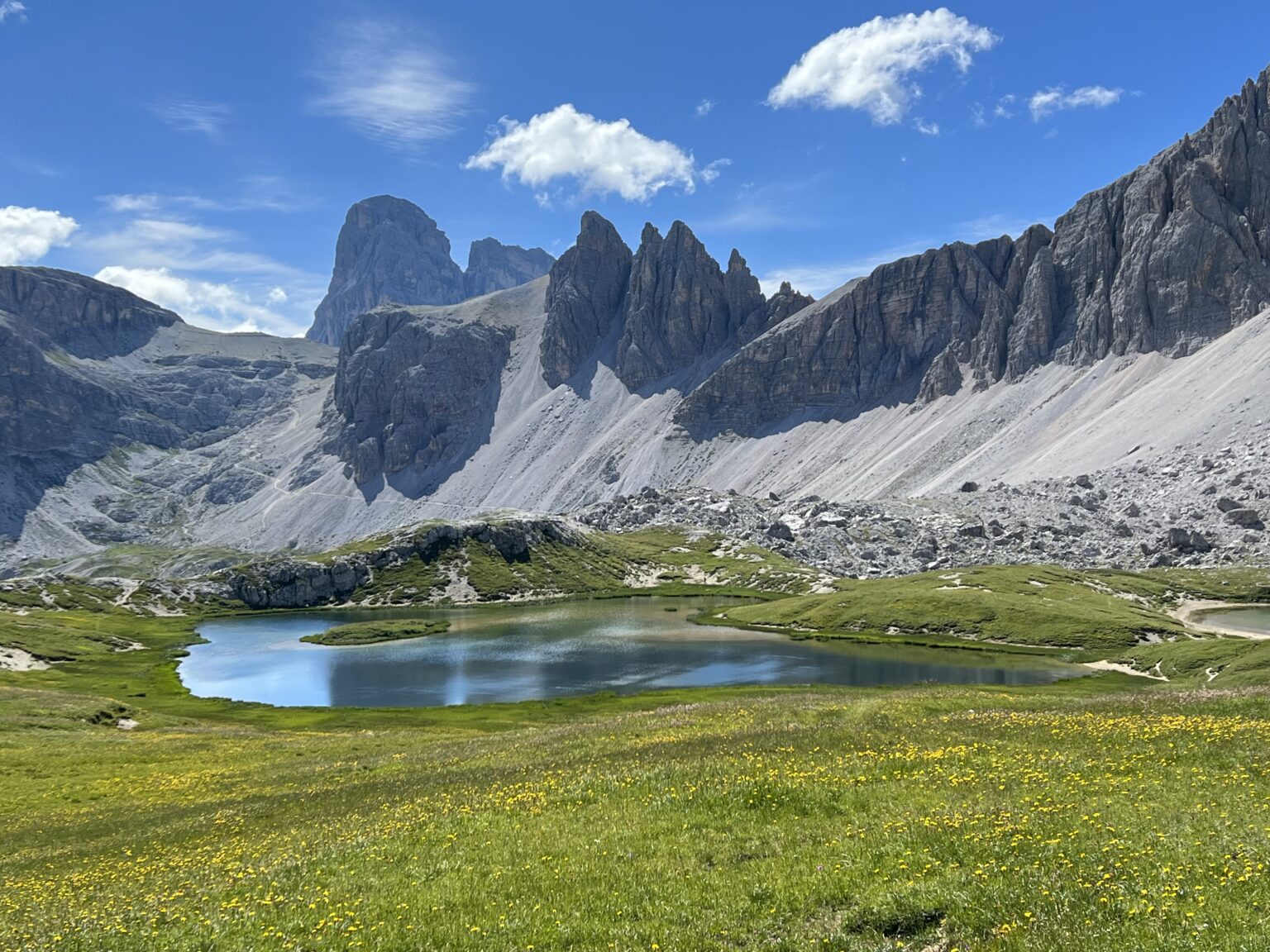
In the east: pale rock towers formed from ancient coral reefs, glowing pink in the evening light. The Dolomites have been a UNESCO World Heritage Site since 2009 – four of the nine areas lie in South Tyrol, including the Three Peaks right on my doorstep.
UNESCO World Heritage Dolomites in South Tyrol
Four of the nine areas lie in South Tyrol:
- Northern Dolomiteswith the Three Peaks and Fanes-Sennes-Prags nature parks
- Puez-Geisler (Puez-Odle)between Val Gardena, Val Badia and Villnöss
- Schlern-Rosengarten-Latemarthe mountains of the Rose Garden legend
- Bletterbach Gorgea gorge revealing 250 million years of Earth’s history
South Tyrol’s seven nature parks
On top of these comes the Stelvio National Park around the Ortler.
- Three Peaksmy home park near Toblach, with a visitor centre in the village
- Fanes-Sennes-Pragswith Lake Prags (Lago di Braies)
- Puez-Geisler (Puez-Odle)
- Schlern-Rosengarten
- Rieserferner-Ahrnwhere I worked as a park ranger for many years
- Texel Groupabove Merano
- Trudner Hornin the Unterland, with exceptionally rich flora and fauna
A culture that inspires
South Tyrol is a land of encounters: here north meets south, three languages – German, Italian and Ladin – and many traditions.
An eventful history
From 1915 to 1918 the front line of the First World War ran right through the Dolomites. Around the Three Peaks and on Monte Piana near Toblach, trenches, tunnels and paths still recall the mountain war – places of remembrance where you fall silent.
In 1919, under the Treaty of Saint-Germain, South Tyrol became part of Italy. Difficult decades followed: Italianisation under Fascism and, in 1939, the „Option“, which divided many families. Only with the Statute of Autonomy of 1972 did the region gradually find its way to peaceful coexistence.
Out of this, something unique has grown – almost exotic for many guests from around the world: a German-speaking culture in the middle of Italy. You are in Italy and yet you hear German, dumplings and pasta sit side by side on the table, and in some valleys people greet each other in Ladin. A way of living together that many in Europe now see as a model.
What makes South Tyrol special
- Mountain farms, alpine huts and centuries-old craftsmanship
- Castles, mountain chapels and monasteries along ancient paths
- A cuisine between the Alps and the Mediterranean – from crispy Schüttelbrot to wine
- Living traditions through the year, from the cattle drive to Törggelen
Hiking for everyone
Whether you are just starting out or already know many summits: in South Tyrol there is a path for everyone. Together we will find the hike that suits you.
For beginners
Easy alpine pasture trails, loops around mountain lakes and short stages with plenty of time to look around and breathe.
For regular hikers
Longer hikes with more elevation gain, high trails with sweeping views and a stop at a mountain hut.
For experienced hikers
Demanding mountain hikes in alpine terrain – requiring sure-footedness and stamina, with unforgettable moments.
Discover South Tyrol with me
Tell me when you are coming and what you would like – I will suggest a hike that suits you.